Software licensing: make the shipped artifact explainable
Open-source and commercial software licensing is separate from export authorization. An SBOM records components; it does not automatically prove license compliance, absence of vulnerabilities or safe provenance. This original release workflow uses SPDX as a reference for structured component/license information.
SecNet learning series · 1.0 · Source check: 2026-10-11Original SecNet educational content. Examples are fictional; this is not a publication or endorsement by the referenced organizations.

Information security · three objectives
Controls protect different properties of an information asset.
Limit access, protect stored/transmitted data, and review sharing decisions.
Show process diagram
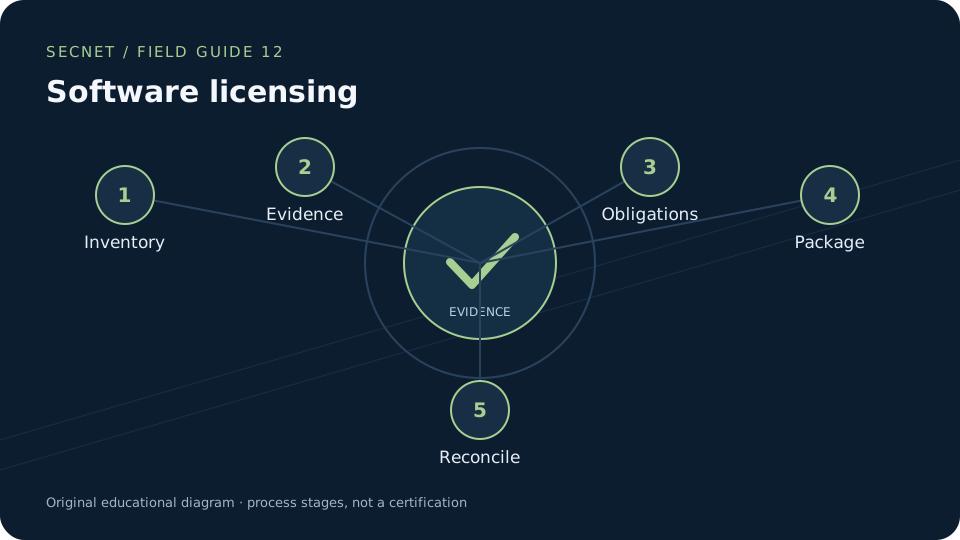
How to plan and execute
- Inventory the actual shipped build, transitive dependencies, embedded assets and copied code. Distinguish development-only components from what customers receive or access.
- Collect license expressions, notices, origin and versions with evidence. Treat unknown, conflicting or custom license text as a review item rather than guessing a familiar license.
- Review obligations against distribution, modification, linking and network-service use with qualified license review. Do not assume all copyleft licenses have identical conditions.
- Prepare the required notices, license texts and any applicable source/offers or other artifacts. Verify that the delivered package contains the approved materials.
- Assess dependency security and provenance in parallel but keep conclusions distinct. A vulnerability patch can introduce a new license or component requiring review.
- Link the approved SBOM and review record to the immutable release digest. Reconcile changes on upgrades and route unresolved obligations to an accountable decision.
Tools & work records
- SPDX — structured component/license representation; record document version and artifact relationship.
- ScanCode Toolkit — detect license/copyright evidence; detections require review and do not issue a legal verdict.
- Trivy — dependency/SBOM and license-related inspection where supported; reconcile output against the actual release.
What reports are produced?
- Release-linked component inventory/SBOM and provenance gaps.
- License-obligation matrix with review decisions and evidence.
- Delivered notices/source artifacts and exception/change record.
Connect the decision to evidence
Fictional release: the source repository has an SBOM, but the container includes another dependency added during packaging. The team compares the image inventory with the repository inventory, reviews the extra component’s license and updates the delivered notices. The release record refers to the container digest, preventing approval of one artifact from being silently reused for another.
Closure check
- Actual shipped artifact inventoried?
- Unknown licenses and obligations reviewed?
- Notices and review match the release digest?
Official sources
Use these sources for criteria, tools and regulations; verify applicability and version for the actual assessment.