Security audits: turn control claims into evidence
A useful audit separates a written policy, an implemented control and demonstrated operation over time. NIST SP 800-53A Rev. 5 offers assessment methods; the audit criteria still depend on the agreed framework, contract or law. This workflow is an original planning aid, not a certification decision.
SecNet learning series · 1.0 · Source check: 2026-10-11Original SecNet educational content. Examples are fictional; this is not a publication or endorsement by the referenced organizations.

Audit · from criteria to closure
Select a stage to inspect its evidence and deliverable.
Combine examination, interviews and testing. Findings link criteria, observed evidence, impact and an accountable remediation owner.
Scope, exclusions, criteria version.
Show process diagram
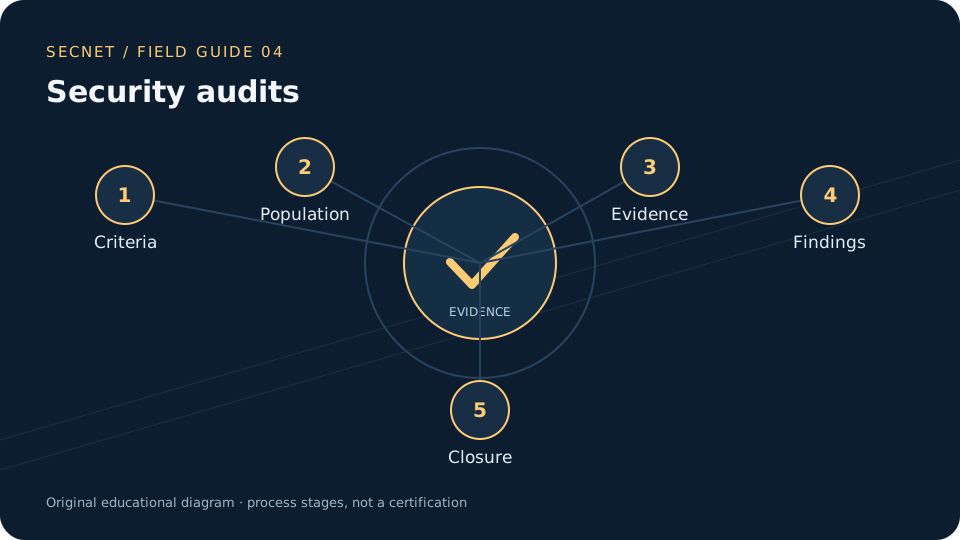
How to plan and execute
- Agree the audit objective, criteria/version, organizational boundary, period, independence and reporting audience. Separate compliance questions from technical assurance questions.
- Build a risk-based control population with named owners. Identify outsourced controls and shared responsibilities rather than assuming a supplier certificate covers your configuration.
- Plan evidence requests with provenance, access limits and retention. Minimize personal data and use read-only exports where practical.
- Select samples with a documented rationale and period coverage. Examine records, interview owners and test selected controls; a convenient sample is not automatically representative.
- Validate findings with control owners: criterion, observed condition, evidence, consequence and cause. Mark missing evidence as a limitation instead of inventing operating effectiveness.
- Agree corrective actions, owners and dates. Close only after closure evidence meets the original criterion; track accepted residual risks separately.
Tools & work records
- Evidence register — stable IDs, source/time/owner, restricted links and a retention decision; avoid uncontrolled screenshot folders.
- Read-only IAM/ticket/log exports — inspect operating records using the smallest required data set.
- Sampling worksheet — population, selection rationale, period and exclusions; do not claim statistical confidence without a statistical design.
What reports are produced?
- Audit plan and control/evidence request list.
- Workpapers, sample rationale and finding register.
- Management report, corrective action plan and closure evidence register.
Connect the decision to evidence
Fictional audit: the policy requires quarterly access review. One signed spreadsheet proves one review, not a year of operation. Request the four review records, reconcile them with the account population, sample departures and track unresolved exceptions. If a quarter is missing, report the evidence gap and its impact on the conclusion without backdating a record.
Closure check
- Criteria and period agreed before sampling?
- Evidence provenance and exclusions recorded?
- Closure based on evidence rather than a promise?
Official sources
Use these sources for criteria, tools and regulations; verify applicability and version for the actual assessment.