OWASP Top 10:2025 — ten risks, ten evidence questions
OWASP Top 10:2025 is an awareness reference, not a complete test standard or a certification. The ten cards below pair the official category names with original SecNet lab questions and closure evidence. Use a versioned ASVS requirement set and relevant WSTG tests to build coverage beyond these categories.
SecNet learning series · 1.0 · Source check: 2026-10-11Original SecNet educational content. Examples are fictional; this is not a publication or endorsement by the referenced organizations.
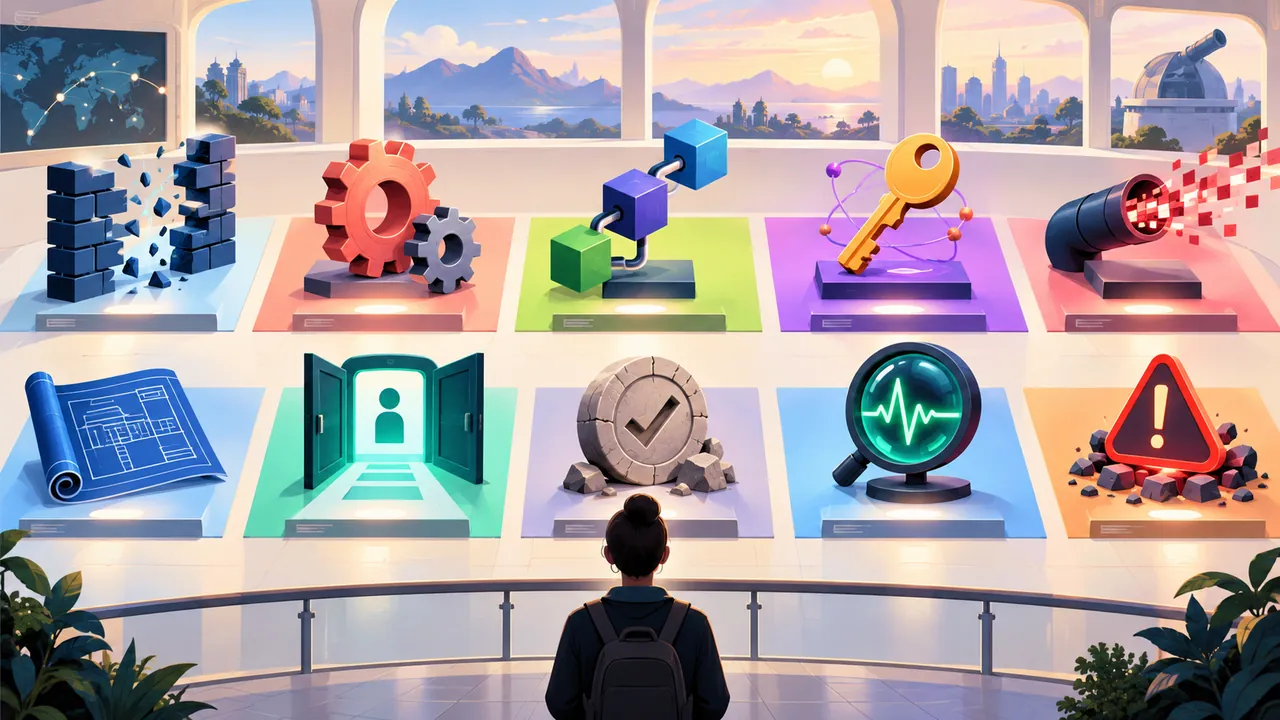
Web security · a request under inspection
Follow a request through distinct control points. Select a case to see where it stops.
The illustrated request passes each check. An edge filter does not replace application authorization.
Show process diagram
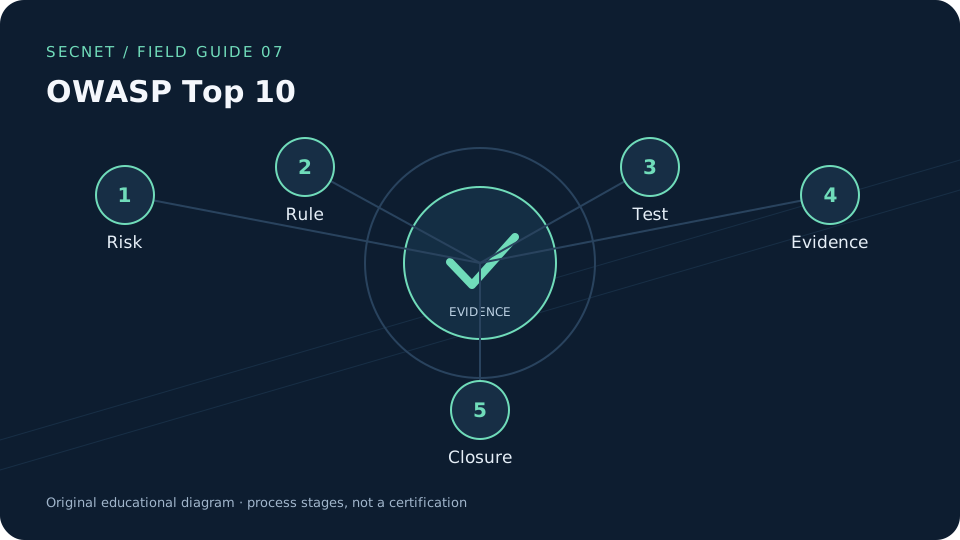
How to plan and execute
- Identify the release and business workflows being assessed; record third-party and inherited controls separately.
- Map each relevant risk to assets and a testable security rule, not simply a checkbox with the category name.
- Choose synthetic positive and negative cases at the actual server or trust boundary. Obtain authorization before dynamic testing.
- Validate tool alerts and document exploitability prerequisites, affected build and redacted evidence.
- Assign remediation to code or platform owners; review shared root causes when several categories point to one architectural defect.
- Retest with the original failing case plus a permitted neighboring case. Preserve untested coverage and residual risk explicitly.
Tools & work records
- Semgrep — selected code rules supporting specific hypotheses, followed by manual validation.
- Trivy — release artifact and dependency evidence for supply-chain review.
- ZAP — permitted dynamic web checks; business logic and authorization require additional designed tests.
What reports are produced?
- Risk-to-control coverage matrix with the OWASP edition.
- Validated technical findings and release-specific evidence.
- Remediation/retest register and gaps beyond Top 10.
OWASP Top 10:2025
Official category names with original test questions and closure evidence:
Broken Access Control
Can a test tenant access another tenant’s synthetic report? Enforce object authorization at the service boundary. Closure evidence includes denied cross-tenant and allowed owner requests.
OWASP ↗Security Misconfiguration
Does the deployed environment expose a diagnostic route or broad storage permission? Compare intended configuration with runtime evidence. Recheck the deployed revision after the change.
OWASP ↗Software Supply Chain Failures
Can the team explain each dependency and how it enters the release? Review provenance and update controls. Compare the approved inventory with the shipped artifact and document unresolved sources.
OWASP ↗Cryptographic Failures
Who can decrypt an exported backup, and how are keys rotated? Trace access across the actual storage/key boundary. Evidence should demonstrate approved decryption and rejected unauthorized access.
OWASP ↗Injection
Does a synthetic input become executable query or markup? Prefer parameterized data handling and context-appropriate output encoding. Record the affected sink and a regression test, not just input filtering.
OWASP ↗Insecure Design
Can a user skip a required approval transition? Model valid states and invariants before adding UI restrictions. Test the forbidden transition at the backend with a synthetic workflow.
OWASP ↗Authentication Failures
Does password reset or logout invalidate the intended session? Test the lifecycle using authorized test identities. Evidence includes rejected stale sessions and successful new authentication without revealing tokens.
OWASP ↗Software or Data Integrity Failures
Can an altered artifact or message be accepted as trusted? Define the integrity boundary and verify it before use. Test rejection of a modified synthetic artifact and acceptance of the approved one.
OWASP ↗Security Logging and Alerting Failures
Does a denied privileged action reach the response team with useful context? Exercise logging and alert routing end to end. Preserve the event-to-alert evidence while excluding secrets and unnecessary personal data.
OWASP ↗Mishandling of Exceptional Conditions
What happens when a dependency times out halfway through a transaction? Specify safe failure and resource limits. Exercise the synthetic failure and verify that partial state, repeated attempts and cleanup respect the business invariant.
OWASP ↗Connect the decision to evidence
Fictional review: an authorization bug and a missing alert are separate questions. Fixing object ownership does not prove alert routing works. Give each control its own evidence and closure condition; use the cards below to discuss ownership with engineering, platform and response teams. A “Top 10 compliant” claim would overstate what this exercise establishes.
Closure check
- Category labels and report edition both say 2025?
- Every relevant category has a testable rule and evidence?
- Coverage beyond awareness categories considered?
Official sources
Use these sources for criteria, tools and regulations; verify applicability and version for the actual assessment.